

 January 2026
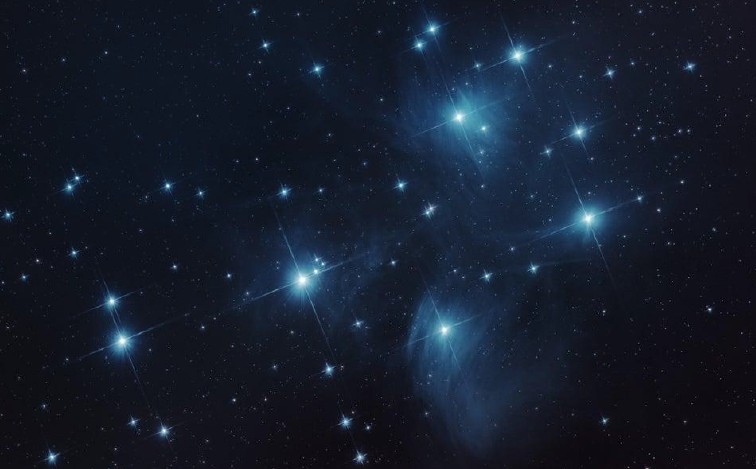
– The Pleiades Star Cluster Shines Brightly All Month
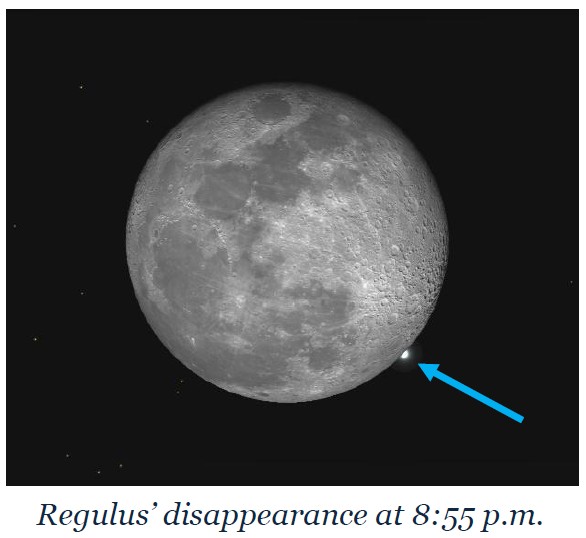 2 Feb. 2026
– The Moon Hides the Bright Star Regulus

5 Feb. 2026 – Club Meeting Presentation
— Thursday night, 7:00 – 8:30 p.m.
This free speaker presentation will be offered in-person at the
UNC-Asheville Reuter Center and virtually online. Registration is not required; use this Zoom link to watch the presentation remotely.
Although parking is free for this event at the UNC-Asheville Reuter Center, you must register your vehicle with a “Visitor 5pm – 6am” permit type at this link. Once registration is complete, visitors will not need to print or display a permit; the system utilizes camera-based License Plate Recognition technology. All vehicles must park front-end in, so that the license plate is visible.
An Astronomy Guest Speaker Series Event – a collaboration of the Astronomy Club of Asheville and UNC-Asheville
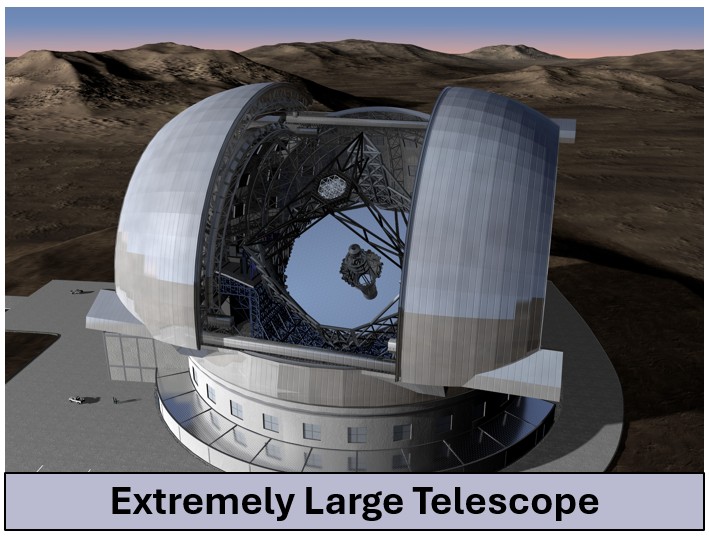 Are We Alone? Exploring the Cosmos with the World’s Largest Telescopes
– presented by
Dr. Luis Agustín Chavarría Garrido,
Visiting Assistant Professor and Astronomer,
UNC-Asheville
Are we alone in the Universe? This question has inspired human curiosity for centuries, and today it drives some of the most ambitious scientific projects on Earth. Two of them — the Extremely Large Telescope and the Giant Magellan Telescope (both located in Chile) — will soon become the most powerful telescopes ever built. Read more…
Two Public Star Gazes in February
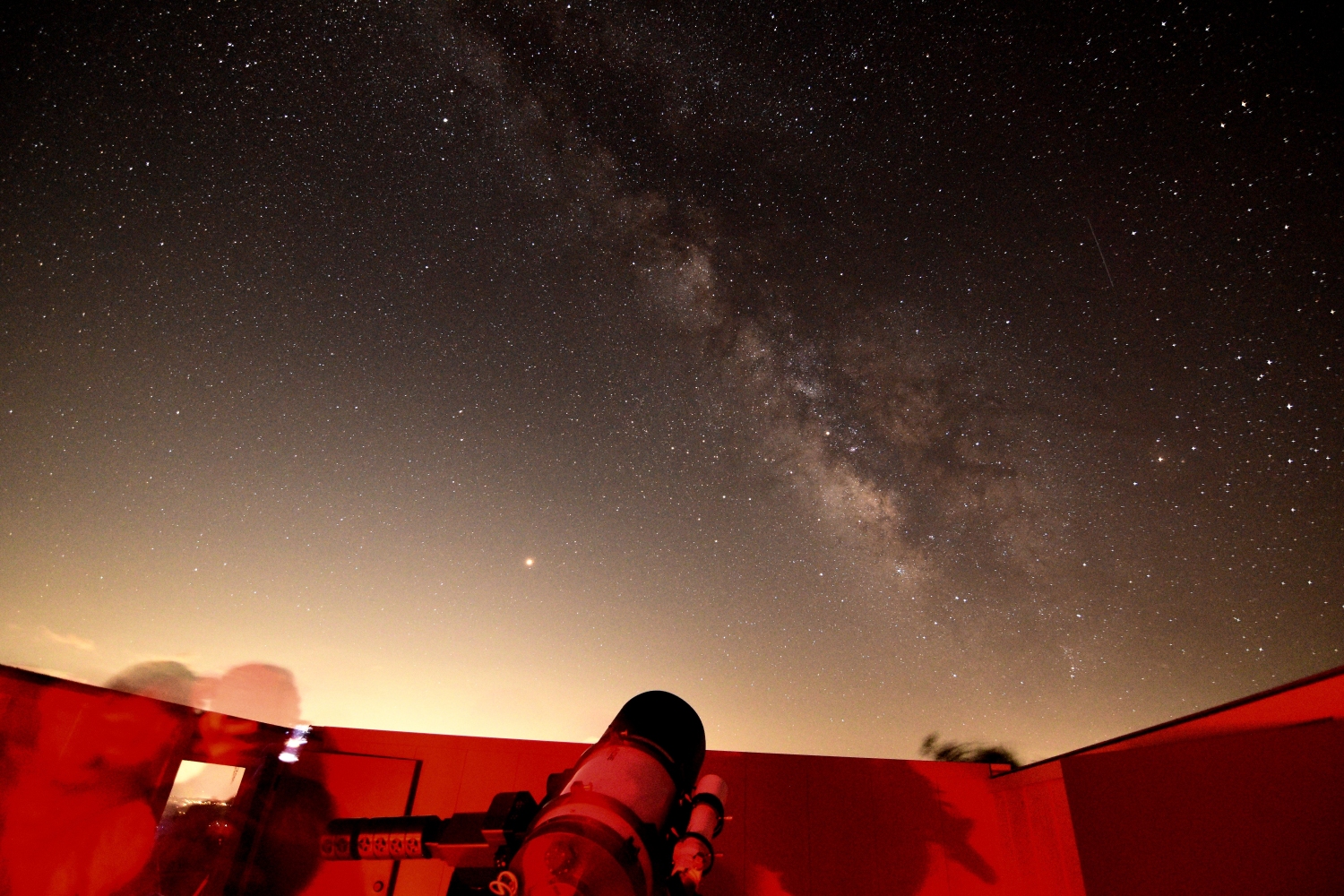
Image credit: club member Jerry Sherman – taken at Grassland Mtn. Observatory
Continue to check this home page as weather could change the venue or postpone and possibly cancel a star gaze. Check again after 4:00 p.m. on the afternoon of the observing session for the latest info and update.
6 Feb. 2026 — Friday night — This public star gaze will be held at Grassland Mountain Observatory in Madison County, with a weather backup night of Saturday, 7 February. This event is free and open to everyone — registration is not necessary to attend. A temporary gate code, required for entry, will be provided here on the day of the star gaze by 4:00 p.m. Directions to Grassland Mountain Observatory can be found here. These star gazes normally conclude about 3 to 4 hours after sunset, and visitors are not permitted to stay past the conclusion time. Sunset occurs at 6:03 p.m.
13 Feb. 2026 — Friday night — The location for this star gaze will be Lookout Observatory on the UNC Asheville campus, with a weather backup date of Saturday, 14 February. While the event is free and open to everyone, pre-registration is required to attend. To learn more about how to register, please visit the UNCA Lookout Observatory website here. Sunset occurs at 6:10 p.m., with shuttle service beginning about 7:00 p.m.
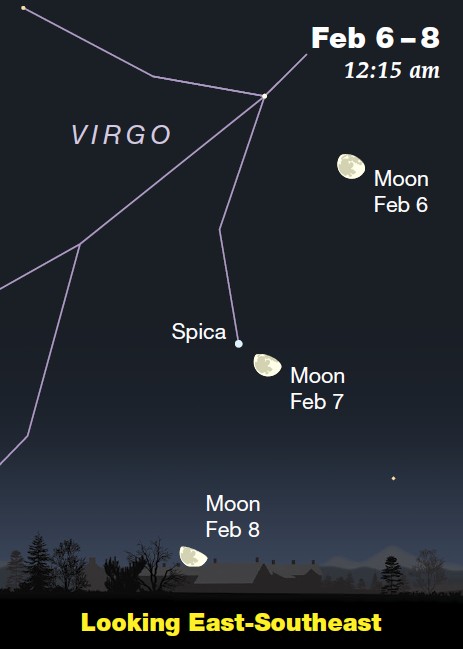 6-8 Feb. 2026
– The Moon Glides by the Bright Star Spica
Illustration courtesy of
SKY & TELESCOPE
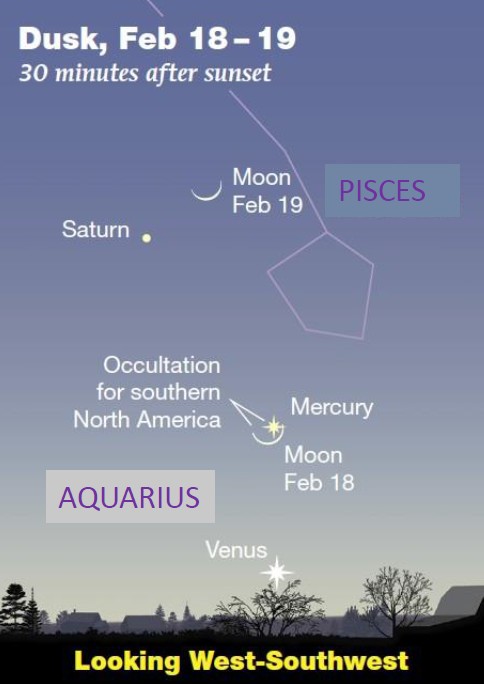 18-19 Feb. 2026
– The Moon Joins 3 Planets at Dusk
Illustration courtesy of
SKY & TELESCOPE